Tag: travel

Quito, Ecuador

Nestled in a valley in the Andes mountains, Quito, Ecuador is one of the highest capital cities in the world, sitting at a 9,350-foot elevation (2,850 meters). This capital city sits on the equator, the middle of the earth. The original name of the city is Quitu, which is Quechua for “center of the earth.” The Spanish couldn’t pronounce it so they called it Quito, and the name stuck.

When I first came to Ecuador and got cash, I was surprised to find a familiar currency: U.S. dollars!

To start, it’s worth noting that Ecuador has been in deep economic insecurity since the 1990s. Back then, it was the perfect storm: oil prices fell, there was political instability, and banking regulations were weak. Ecuador’s national currency, the sucre, collapsed as inflation soared and people lost all of their savings. Since the sucre was beyond saving, Ecuador uses the U.S. dollar because it was the fastest way to restore stability. But in turn, it gave up its monetary independence, and it’s at the mercy of U.S. market sways. People are trying to survive, with unemployment rate being 37%.

Safety in Quito

While Quito has a lot to offer, the city can be a little rough around the edges in some parts. There are petty thefts and sometimes robberies. I wouldn’t go more than a few blocks without taking an Uber, because the rides are tracked and are considered much safer. For instance, I walked 2 km to La Mariscal Artisan Market from my hostel. As I walked through a park, there was a masked man hiding behind a tree, looking right at me! I immediately switched paths and walked faster. After perusing the market, I took an Uber back to my hostel.

Anyway, it’s best to keep your wits about you and use common sense as always. Don’t flash your valuables, avoid wandering around alone at night, and don’t take anything from strangers. Things I wouldn’t even do in the U.S.

Quito is breathtaking—literally!

Coca leaves.

Since Quito sits at over 9,000 feet, I definitely felt the elevation! After my first night, I woke up with a headache and my heart was pounding. It felt harder to breathe. Chewing on coca leaves helped alleviate the altitude sickness. They taste like yerba mate and green tea. Coca leaves are what cocaine comes from, but this plant isn’t a drug; it’s medicine. It doesn’t get you high. Instead, this mild stimulant works by dilating the blood vessels to let more oxygen pass through like caffeine does. You can make a tea, but I preferred to chew on them to get a fuller effect. The headaches cleared away like clouds parting to let the sun through.

Aya Huma

Crocheted Aya Huma mask

The Inca Empire spread its influence throughout the Andes mountains. In Ecuador, Aya Huma reins supreme. Literally meaning “head of spirit,” it’s the vital guiding life force present in rituals, resistance, and warfare. When the Spaniards came, they denounced these celebrations as Satanic, calling them “diablo uma” (head of the devil). Today, crocheted rainbow masks appear everywhere in Quito. The mask has two faces to represent the dualities of life: light and dark, sun and moon, masculine and feminine, hot and cold, good and bad, etc. The masks are rainbow-colored, because mixing light and water makes rainbows. Rainbows symbolize circle of life, which is why Andean clothes are colorful.

The summer solstice is when people celebrate Inti Raimy (festival of the sun), where Aya Huma lays a homage to the sun god (Inti Raymi) for the maize harvest. People may have ritual baths in waterfalls, rivers and springs at midnight, aiming to drive out negativity and welcome in new energy for the coming year.

Exploring Quito

I highly recommend taking a walking tour to get to know Quito and its gems. Some of them are free, although a tip is expected at the end. It’s truly worth it.

Basílica del Voto Nacional

The crown jewel of Quito, Basílica del Voto Nacional

Starting with the Quito’s crown jewel, Basílica del Voto Nacional is an ornate 19th-century neo-gothic Catholic cathedral. Inspired by the Notre Dame in Paris, you can’t miss this Catholic temple among the hills.

Upon closer inspection, instead of stone gargoyles, you’ll find the big contenders of the Amazon rainforest: jaguars, iguanas, tortoises, condors, monkeys, and more. The Basilica is a tribute to Ecuador’s biodiversity, bridging the gap between nature and faith.

The Basilica is perpetually unfinished for two reasons. First, if it’s finished, taxes must be paid to the government. That’s why you’ll see unfinished buildings around Quito: it’s a loophole to avoid paying taxes. Second, if the cathedral is finished, many believe that’s when Armageddon starts. The inhabitants would like to avoid that as well.

I didn’t go inside, but apparently you can go into the highest tower and feel the wind as you climb further up. Just don’t look down. 😉

Plaza Grande

People gather at Plaza Grande as the city’s meeting point.

Plaza Grande, literally meaning “big square,” is the city’s most popular meeting spot. It includes the colonial-style Presidential Palace, the metropolitan cathedral, and the City Hall. People gather at this spot to eat, gossip, share news, sell their wares, and just hang out. Ladies would sell fruit for a dollar. I stocked up on pitaya and mangos for the week.

La Mariscal Artisan Market

One thing I love to do is meandering through artisan markets and finding culturally-specific pieces you won’t find anywhere else. La Mariscal Artisan Market has rows and rows of vendors selling wares, like hand-painted crucifixes, intricate indigenous beaded jewelry, chocolate straight from the source, and colorful woven fabric. I often collect magnets, so I got a little Aya Huma magnet.

TelefériQo Cable Car

For some local hiking and sweeping city views, the TelefériQo Cable Car can carry you over the green hills and farms to even higher ground. The top sits 4,000 feet above Quito, which made the elevation over 13,000 feet! I was hiking among the clouds amid the surrounding beauty, overlooking the city below. Although the thinner air made me breathe harder, I wouldn’t say the hike was too difficult.

The sun was setting behind the clouds, emitting golden god-like rays to the city below. I kept walking on the dirt trail through the dense clouds, passing a small basic restaurant and a horse stall. The journey took about an hour and a half. Eventually, I passed a modern-looking church, which was near the end of my little hike at the top of the hills.

It was getting dark, so I went back to the cable car station to go back. Descending over the shadows towards the glittering city was the perfect way to end a day of exploring.

Vegan food in Quito

Like in Medellín, vegan options are plentiful in Quito. Most of my vegan meals consisted of fruits, veggies, and seeds. I did visit a couple of vegan places.

Vegano de Altura was not to be missed, especially since they offered a 7-course Saturday brunch for only $14. The plates included a small bowl of granola with fresh fruit, bean-based ceviche with plantain chips, an arepa with a pickled side, and a slice of apple pie to finish it off.

My favorite arepa.

Just a block away from my hostel, Coffee Romance offered the best arepa I ever had in South America. The owner of the restaurant is Venezuelan, which is where the arepa comes from. (Colombia claims this, too.) This corn-based treat was stuffed with seasoned black beans, fried plantains, and buttery sliced avocados. Not only was this arepa bursting with flavor, the protein, fat, and complex carbs were also grounding for my mind and body. The owner was easy to talk to, and he clearly took pride in the food he has to offer.

Cotopaxi Mountain

Me in front of Cotopaxi.

I took a group tour to Cotopaxi Mountain, the second highest active volcano in Ecuador. In the Quechua language, “coto” means “neck,” and “paxi” means “moon,” since the crater at the top looks like a crescent moon. The Andean people worshiped the sacred mountain, believing the gods would bless them with rain, which would provide fertility to the land.

Hiking among the clouds to basecamp, where the mountain touches the sky.

Remember when I mentioned that Quito’s elevation is over 9,000 feet, and that the cable car takes you past 13,000 feet? Cotopaxi is even higher. The group and I set out for a hike from the bottom of the volcano to the base camp. Then I ventured a little further to 16,000 feet (4,900 meters), where the snow starts. That’s 2,000 feet higher than Mt. Rainier in Washington State! As hikers, we couldn’t summit the mountain. That requires special training and climbing gear for the hardcore mountain climber.

Here I am, standing at 16,031 feet (4,999 meters). That’s as far as I could go.

Bringing the coca leaves was a must, because my head was absolutely swimming and my hands tingled as I gasped for air. I thought about going further to 5,000 meters. Another guide said it would take another half an hour to get to that altitude. I wanted to keep going. But my body wasn’t having it, declaring that 4,999 meters was enough. And honestly, that was the right call.

Then we went down to the utilitarian base camp to have a snack and a drink. It was bare-bones yet quaint, a convivial meeting place to swap travel stories before going back.

If you’re in Quito, definitely try to get to Cotopaxi! That might have been the highlight of my trip to Ecuador.

Mitad del Mundo

The equator is a big red line.

Since Ecuador sits at the equator, I decided to check out Mitad del Mundo. In case you wanted to know what the equator looks like, it’s a big red line running across. The line is marked as accurately as possible by GPS. The museum, Intiñan Equator Museum, is an interactive site offering immersive science experiments, pre-colonial and indigenous exhibits, and a demo on how chocolate is made from the cacao plant. One of the indigenous exhibits even features a real shrunken head! A shrunken head was considered a war trophy back then. It’s made from the head of a captured enemy and boiled to shrink it. Then a stone is placed inside before it’s sewn shut.

The immersive science experiment shows the Coriolis effect, such as watching water drain clockwise or counterclockwise, depending on where it stands on either side of the equator. You could even balance an egg on the equator itself. The Coriolis Effect influences everything that moves on the face of the earth. As the earth rotates, it pushes any fluid, mass, or particles towards the poles. The magnitude of this effect is proportional to the speed of the fluid, or the swirl that the Earth’s rotation creates. So, a fluid in motion will turn counterclockwise in the northern hemisphere, and clockwise in the southern hemisphere. A good example of this is seeing how a toilet flushes. At the equator, the Coriolis effect is cancelled and water falls straight down the drain. (As an aside, this is why hurricanes don’t go to the equator.)

Notice how the water drains clockwise, pulling the leaves with it.

At Intiñan Equator Museum, our guide filled a sink with water, put it on the north end of the red line, and drained it. We watched the leaves swirl in a counterclockwise direction as the water drained into a bucket below. On the south end of the red line, the water flowed clockwise.

Look, I did it!

While it was cool, I question the validity of the experiments. First of all, with enough patience, you can balance an egg anywhere in the world. Also, I would think that moving the water just a few meters from the red line wouldn’t make much of a difference, if this effect gradually gets stronger towards the poles of the earth. But I don’t know how the museum would stage this, since it was just a bare-bones sink with a bucket underneath. It’s still cool though. Maybe kids would like this more.

Final thoughts about Quito

Mural by TNaz at TelefériQo

While I liked Quito, Ecuador is better known for its nature and biodiversity, whether you want to check out the hiking trails at the top of the hills or visit Cotopaxi Mountain. If I were to go back, I’d check out a chocolate farm next time or even visit the Galapagos Islands. The entire country is beautiful beyond the city. Nonetheless, I still enjoyed my visit in Quito and now I know what I can do next time!

A large Jesus statue stands in front of Medellín.

Medellín, Colombia

A small bag of coffee is placed with a small Colombian flag and currency, plus a passport entry stamp.

Once known as the epicenter of the narcotic drug trade, Medellín, Colombia has slowly been healing from the 50-year armed conflict that ended in 2016. While the memories of the violence have certainly permeated the city, Medellín offers so much more amid its lush surroundings: good coffee, emotive street art, delicious vegan food, and more.

Safety and Getting Around in Medellín

An enormous statue of Jesus is draped with colors of the Colombian flag with the city in the background.

Once known as one of the most dangerous cities in the world, Medellín has turned itself around and has become much safer. Not only has it emerged from its violent past, it has gathered that pain and suffering, and turned it into something beautiful. That being said, it’s still important to stay aware and keep your wits with you.

An orange hibiscus is in full bloom.

There’s a saying in Colombia: dar papaya, which literally means “giving papaya.” It means when someone naïvely makes themselves an easy target, such as carelessly flashing their valuables (like their newest iPhone). Since petty thefts are still common, someone might snatch it out of their hands or even violently rob them for it. As long as you keep your belongings hidden, you put yourself less as risk.

I stayed in Rango Hostel in El Poblado, which is one of the safest parts of Medellín. Women were running solo in broad daylight with headphones, which is a good sign. While it’s a busy neighborhood, I felt at ease. The tranquil Laureles neighborhood is also another good option to stay in; that part of the city is more residential.

Ronnie rides on a motorcycle in Medellín traffic.
I could do this all day!

As a solo woman traveler, I used Uber since the app tracks the location of the rides. Opting for a motorcycle or scooter is much cheaper and tons of fun! I loved feeling the summer air whipping on my skin as the driver zipped through the chaotic traffic. I could do that all day!

Generally, as long as you’re staying away from narco and sex tourism, you’ll be much safer in Medellín. Just don’t engage in either.

Vegan Food in Medellín

From bustling fruit markets to healthy vegan restaurants, there’s no shortage of food for vegans in Medellín. El Poblado has the most vegan restaurants in the city, which is another reason why I stayed there. There are others throughout as well. It was a vegan food heaven!

Plaza Minorista José María Villa

Mangos, plums, and apples from La Minorista fruit market.
The freshest and juiciest fruits.

Because Colombia is in a tropical climate, there’s no shortage of the juiciest, most succulent fruits and veggies in the world. If you want to try exotic fruit and veggies that you may not find anywhere else in the world, Plaza Minorista José María Villa is the place to go. Fresh fruit is cheap and plentiful here. There was pitaya (fruit that looks like a magenta dragon egg), avocados the size of mangos, and mangos nearly the size of a football!

Corn arepa with smashed avocado and seeds.

I bought enough avocados, mangos, plums, and pitaya to have as breakfast throughout my stay in Medellín. I also got some arepas de choclo, or corn cakes. The dense arepas were perfect to spread avocados on and sprinkle with pumpkin and sunflower seeds.

Coraje Vegan

A kale salad is topped with plant-based protein, tomatoes, pickled beets, crushed seeds, avocado, and dressing.
La ensalada proteíca from Coraje Vegan

El Poblado has the most vegan restaurants in Medellín, hence why I stayed there. I didn’t go out to eat that often, because the fruit markets truly satiated me. Still, the city has so many wonderful vegan restaurants to offer, serving healthy Colombian food bursting with mind-blowing flavor.

Coraje Vegan is an eco-chic vegan eatery that serves healthy vegan food. I had the Ensalada Proteíca, a protein-packed salad topped with grilled tofu, sauteed mushrooms, lentils, cherry tomatoes, picked vegetables, avocado, and mixed seeds. The protein kept me full for longer sustained energy. This flavorful dish truly fueled me so that I could explore the city longer.

Restaurante Las Veganas

Seitan with sliced avocado, pickled veggies, and potatoes.
The best vegan Colombian food.

In the tranquil, leafy neighborhood of Laureles, Restaurante Las Veganas is a laid-back restaurant serves traditional vegan Colombian food. The plate I had was filled with protein-packed seitan, potatoes, a small salad, picked veggies, and slices of avocado. It was the perfect lunch to reenergize me on a sunny day.

Las Veganas also has a small shop stocked with coconut oil, sauces, protein powders, dairy-free cheeses, kombucha, coffee, and more. So, you can take a small taste of Colombia with you.

What I Did Around Medellín

A mural shows different layers of a woman's side portrait.

Since I only stayed for a few days, I did as much as I possibly could to enjoy this city and what it has to offer. I spent much of my visit learning about the intense history of Medellín, the multi-layered 50-year armed conflict centered around narcotic trafficking, colonialism, fighting over resources, and more. As I mentioned before, Medellín has emerged to take back its collective identity. Here’s what I did to enjoy what Colombia has to offer.

Learning Colombian Slang

Cards show examples of Colombian slang as part of a drinking game.
Some Colombian slang.

My Spanish has gotten pretty decent over the years. I can hold a full conversation for hours! But I only know standard Spanish, and not much slang. Colombians heavily use their local jargon, and it’s an integral part of their Spanish. Sometimes I try to listen to what people are saying, and it’s hard to recognize any of the words. To be truly fluent in another language is to know their slang well.

It’s important to note some words may have different meanings, depending on the country. Others are considered safe to use in one country, but are offensive in others. Most importantly, each country has its own slang; some of it is even city-specific.

Rango Hostel (where I stayed) offers a word drinking game involving the local slang. (I just had seltzer water.) It informative, hilarious, and even kind of offensive at times. For instance, Colombians throw around the word marica like it’s nothing. In this case, it means “dude” in a friendly manner. However, in other Spanish-speaking countries, it means “faggot” and is considered extremely offensive!

Other words include:

  • Tinto: Black coffee without cream or sugar. (I saw this a lot at cafes.)
  • Llave: Literally means “key.” In this case, it means “best friend.”
  • Parcero: A close friend.
  • Buenas: A greeting, kind of like saying “good afternoon” or “good evening.”
  • Chao: Bye.
  • Que video: An interjection of shock when you hear bad news, as if it only happens in a movie.
  • Güevon: It means “dude” or “friend,” but is considered a playful insult. Only use with close friends.
  • Ese Pirobo: “This fucking guy!”

As you can see, Colombians love using colorful language, and are delighted to rib and provoke even their closest friends. Personally, I prefer using standard Spanish, unless I am 100% comfortable using Colombian slang in the right contexts. One day, I might accidentally offend someone, and they might not want me to come back. Then again, practice makes perfect!

Strolling through Pueblito Paisa

The courtyard of Pueblito Paisa has a garden and a white church.
Pueblito Paisa is an Antioquian replica.

Set on top of the lush Nutibara Hill, Pueblito Paisa is a charming replica of a traditional 20th-century Antioquian village. A prominent church graces the main plaza, with gardens and a large fountain as the centerpiece. It’s a great spot to escape the hustle and bustle of the city. Amid the cobblestone walkways, this magical place has a town hall, a barber shop, snack shops, gift shops selling colorful handicrafts, and even a museum showcasing the musical influences of Colombia.

The restaurants and snack shops don’t offer much vegan food from what I could tell, but I was able to find a refreshing fruit smoothie without milk. You might spend a lot of time in this magical place, so definitely bring some snacks!

Ronnie stands on the cobblestone in front of the church at El Pueblito Paiso.

I spent about an hour in the Museo de la Ciudad at Pueblito Paisa. This museum showcases the history of Medellín. However, this exhibit focused on the musical history of the 20th century to the present: reggaeton, cumbia, rap, rock ‘n’ roll, and even punk. Most of the signs are in Spanish, but some are in English. I read twice as slow in Spanish, so I spent more time getting to know how music influenced Colombian society.

Making feline friends at La Gatoría

A white cat stands on a table in front of a pink neon sign that says, "Te mereces unos ronroneazos en el corazón."
“You deserve some purrs in your heart.”

Housed in a Spanish-style home, La Gatoría is a warm cat cafe in the leafy Laureles neighborhood. It offers some vegan plates to enjoy amid the adorable resident and adoptable cats.

Ronnie holds a 6-week old with a wide-eyed expression, while an adult cat looks on in the background.
Don’t mind me—just enjoying the kitty love here.

These kitties are lovely, funny, and a tad mischievous. The matriarch cat ensured that everyone knew that she’s the boss. A black-and-white cat climbed up the Christmas tree and overlooked the whole establishment on his evergreen perch. The staff even brought out 6-week old kittens! They were so cute and tiny, it was almost unbearable. I loved the little tortoiseshell kitten. She was bright and curious about the world, although the matriarch cat put her in her place.

A cat stands on top of a fake Christmas tree.
Why are they like this?

You need to make a reservation before arriving. You also need to pay a deposit with the reservation, kind of like an admission fee. The deposit is included in the final bill.

Final Thoughts About Medellín

A large sculpture that says "Medellin" stands in front of a garden and a colorful mural of a woman surrounded by nature.

I loved Medellín. It really has come a long way from its violent past and turned its pain into gold. The people were friendly, kind, and excited to share their culture. The food was incredible, and the sights were something to behold. I enjoyed immersing myself in slang word games and then seeing those words on the streets. The next time someone is worried about how Medellín might be dangerous, share this blog post and show them that it’s a colorful, vibrant place that deserves recognition.

Buenos Aires, Argentina

A wrapped alfajor cookie sits on top of a handmade necklace with tassels, surrounded by Argentinian money and the flag.

Aboard the foot ferry from Montevideo, it took three hours to cross the river into Buenos Aires, Argentina. This city was my last stop of the Southern Cone trip in South America. That ferry might be the nicest boat I’ve ever been on. It even has a duty-free shop! While I never buy anything from those stores, it’s still nice to look around while enjoying the smooth sailing across the river.

Anyway, here are my observations about Buenos Aires, Argentina.

Comparing Notes about Argentina and Uruguay

Uruguay and Argentina are like two peas in a pod. Both countries speak the Rioplatense Spanish dialect, and both are best known for yerba mate tea, asado (steak), and fútbol (or “soccer,” but don’t ever call it that over there). For example, in both places, “dale” (pronounced “dah-lay”) means “okay” or “go ahead.” It’s an important one to know, because people say it all the time to express agreement or encourage someone to do something.

Argentina reveres Lionel Messi like a god.

Argentina won the World Cup two years ago, and they still talk about it. The Argentinians revere the famed football player, Lionel Messi, like a god. As such, you’ll see grand murals of Messi throughout the city. They take pride in this national sport.

Another thing about Argentina is to never, ever call Las Islas Malvinas (Malvina Islands) the “Falkland Islands,” because they’re supposed to belong to Argentina and not the UK. In fact, there was a war disputing the territory in 1982, where Argentina invaded the islands in the South Atlantic, claiming ownership. The British disagreed and counterattacked until eventually Argentina surrendered. Hundreds of Argentinian soldiers died in that war. It’s a sore subject to this day.

Finally, the Buenos Aires version of the Rioplantense dialect has a separate set of vocabulary called Lunfardo, which is Italian blended with Spanish. In the late 19th century, Italian prisoners created Lunfardo as its own coded jargon in the underbelly of Buenos Aires. Eventually, this jargon spread into the mainstream. There are about 5,000 Lunfardo words, so it’s practically its own local dialect.

One difference is that Uruguay is expensive, while Argentina is cheap. While I thought that Montevideo is a sleepy little city, Buenos Aires is buzzing with activity. There’s something for everyone in this international city. And since it’s summer and school is out, many of these places can get crowded.

La Navidad in Buenos Aires

Christmas Dinner: Vegan vitel tone with stuffed peppers, mac & cheese, bread, and potatoes

It was my first time spending la Navidad, or Christmas, in the Summer! In the Northern Hemisphere, I would bundle up and sip hot drinks while staying inside with my warm sweaters. In the Southern Hemisphere, people fire up their grills to make their holiday asados, or barbecue meats. People tend to eat dinner rather late, around 10 or 11 p.m. on Christmas Eve, instead of Christmas Day. A tuna-based dish called vitel tone is very popular, as is pan dulce (sweet bread with bits of chocolate and dried fruit inside). Since I’m vegan, my host graciously prepared vegan vitel tone made of seitan, along with veggies filled with seasoned vegan meat. We broke out the pan dulce at midnight to ring in Christmas.

My Spanish Immersion in Buenos Aires

During that night, I managed to hold up a conversation in Spanish for almost three hours! I was so pleased with myself. My host’s family said that I speak very clearly. I still wouldn’t say that I’m totally fluent, but I am comfortable enough with the language. The good people of this city can tell that I’m not from around here, so they speak standard Spanish with me instead of the Rioplantense and Lunfardo.

The Argentinians talk really, really fast. It can be challenging to follow along, but by immersing myself in this language and speaking it daily, I’m learning faster. I even dreamed in Spanish a little bit!

Getting Around in Buenos Aires

Getting around Buenos Aires is easy. Personally, I prefer going by subway, or the Subte. Sometimes I also had to take the bus. I highly recommend getting a rechargeable Sube card, which you can purchase at a Subte station or at a kiosko (kiosk). If you’re taking the bus and see it coming, wave your hand to flag the driver. Then tell them where you want to go in order to pay the correct fare. Easy!

Exploring Buenos Aires

After arriving in Buenos Aires from Montevideo, I rested for a couple of days, especially after walking every day in Chile and Uruguay. It was also much hotter than what I’m used to. It’s okay to take days off and save energy.

Buenos Aires is big. Everywhere I went had a pleasant surprise in almost every corner. It was still an adjustment to experience summer in December, and one that I welcomed. While Montevideo is more reserved and slower, Buenos Aires perpetually pulses with life and energy. Even introverts such as myself might find something they like.

The “Paris of Latin America”

European-influenced architecture is ubiquitous in Buenos Aires.

On Christmas Day, I walked around in downtown Buenos Aires to see what the hot fuss is about. Everywhere I went, an eclectic mix of European architecture flanked the streets. There were influences from Italy, France, Britain, and Germany: Neoclassical palaces with Greek-inspired columns, curved nature-inspired motifs of Art Nouveau, and geometric shapes and hard lines of Art Deco. Buenos Aires feels like being in a European city in South America. Some call it the “Paris of Latin America.”

This is an interesting juxtaposition of a modern art nouveau tower embedded in a contemporary glass building.
This Brutalist building is the National Library of Argentina.

I walked to Avenida 9 de Julio, which is considered the widest avenue in the world, boasting seven lanes on each side. It takes a few minutes to actually cross the whole thing. I did see the towering Obelisco, a major landmark along the avenue. Several blocks away and over is the Casa Rosada, where the President works. Everywhere I went in the Downtown area was an architectural treat.

Palermo has a lot of colorful restaurants and bars.

Then there’s Palermo, where all of the trendy bars and restaurants are. It’s much more expensive, but I really liked just walking through in the daytime and seeing the quirky, painted buildings. On the weekend, there was a street fair with more vendors. I did some holiday shopping there, so my loved ones at home could have a taste of Argentina.

Parque Centenario

One of my favorite things to do was walk among the verdant gardens and lakes within the round Parque Centenario and browse the open-air librerías, or bookstores. Many famous books in Spanish were for sale, such as collections of famous poetry from the late Pablo Neruda or magical realism stories from the renowned Colombian writer, Gabriel García Marquez. I found a Spanish translation of El Principito, which is originally written in French. As an aside, that was the first book I finished in Spanish!

In fact, it was common to see the open-air book stands in other parks as well. Sometimes vendors sold books in their single kiosks on the street. There’s something romantic about distributing knowledge and information for cheap in the form of a good book in an artfully painted kiosk.

El Cementerio de la Recoleta

Eva Perón rests in peace somewhere in this cemetery.

One day, I went to Cementerio de Recoleta, a majestic 5-hectare cemetery where some of Argentina’s most important historical figures are laid to rest. This includes Eva Perón, the wife of Argentina’s most controversial president, Juan Perón. Marble mausoleums and intricate sculptures–mysterious robed figures, stone crosses, and grand winged angels–line the pathways like small city blocks. Walking among these tombs was tranquil yet eerie, as you walk among former presidents, notable political figures, famous writers, and Nobel Prize laureates.

Recoleta Cemetery

After visiting the cemetery, I strolled in the green space lined with street vendors selling art, jewelry, confections, and other handmade goods. I’ve collected a lot of jewelry from around the world and was eager to add to my collection. For only $20, I found a multi-colored braided necklace with four black tassels hanging from silver rings. It would go nicely with many of my outfits.

Centro Cultural Recoleta

A sculpture referencing the work of Julio Cortázar.

Within the same area is the Centro Cultural Recoleta, a multimedia art and cultural space offering exhibits, classes, and performances. Many exhibits featured contemporary art, such as exploring a bizarre fantasy world through a VR headset or kinetic sculptures made with branches and strings. Currently, the main exhibit features the life story of the renowned Argentinian writer, Julio Cortázar. Personal artifacts such as hand-written letters and photographs are on display, as well as original audio recordings and fragments of his writings. Video shorts, sculptures, and installations created by numerous Argentinian artists serve as an homage to his literary works.

Museo Nacional de Bella Artes

Onward, I went to Museo Nacional de Bella Artes, which houses an international public art collection. There are paintings by many iconic European artists such as Francisco Goya, Claude Monet, Vincent Van Gogh, and more. The exhibits transition seamlessly from pre-Colombian, to rococo, to modern, to contemporary art. You could spend hours immersed in the beauty of these pieces. Admission is free, but a donation is suggested.

Jardín Japones

Buenos Aires is known for its many parks and extensive gardens. In the same area as the major museums is the Jardín Japones, or the Japanese Garden. It offers a peaceful break from the hustle and bustle of the city. Since it’s summer from December to March, the garden is lush and green under the sun. Manicured paths wind around the koi ponds, as the huge fish glide through the water. When I went, the azaleas were at their prime this time of year. In the building upstairs is a beautiful kimono exhibit, showcasing colorful traditional garments of Japan. I’ve never been to Japan, and this garden just might be giving me ideas.

How I Feel About Buenos Aires

Ronnie in a green space with the Argentinian flag in the background

I was really blown away by how incredible Buenos Aires is. Everywhere I went, there was something special. Of course, there was a lot of vegan food in the city. I will be writing a separate post about the plant-based food in Buenos Aires. The food discoveries deserve their own page.

There were some other places I really wanted to visit in Buenos Aires, such as the illustrious Caminito, a colorful street lined with multi-colored houses towards the edge of the city. The neighboring La Plata, with its beautifully symmetrical city design, has the towering Gothic cathedral as its centerpiece. I also would love to go inside the National Library next time.

This expansive international city is one that I will have to return to one day.

A gentle blue wave with white foam rolls on the sunny beach.

Chile, Part 2: Viña Del Mar

Greetings from Playa El Sol!

Viña Del Mar is a city just north of Valparaíso that’s known for its beaches and gardens. Although it’s much smaller, there’s still a lot to do in this little beach city–even for a day trip.

From Valparaíso, you can take the bus, subway or taxi to get to its neighboring city. I went down to the Puerto station and bought a round-trip pass to the Viña Del Mar station. The 20-minute trip meanders along the coastline, so try to snag a window seat to take it all in.

Museums I Loved in Viña Del Mar

The subway stops conveniently a block away from Quinta Vergara park, which features lush tropical gardens, a children’s art museum, and the Museo Palacio Vergara art museum.

Museo Palacio Vergara art museum

Inside a Venetian neo-Gothic palace, the Museo Palacio Vergara houses paintings and sculptures from renowned Chilean artists. The art museum is free to enter, although you need to register as a visitor.

"Las Cuatro Estaciones" painting by Mario Carreño.
“Las Cuatro Estaciones”

There were many notable artworks in this museum, and the ones that caught my attention the most were Mario Carreño’s cubic figures with smooth gradients. Pictured here is a large painting called “Las cuatro estaciones,” which means “the four seasons.” According to the artist, it’s about exploring the unknown with the freedom to exist, when life’s conventions may impose limiting beliefs on the spirit. In the future of uncertainty, we’ll have our inner strength to guide us forward.

Within the same park, a rainbow walkway leads you to a children’s art museum called Museo Artequin. This museum only shows copies of notable artworks instead of the originals. I went in, just to see what’s there. There are some audio explanations on some of the artwork, which helped me practice Spanish listening skills. I didn’t stay for very long, though.

After visiting the park and the museum, I explored more of Viña Del Mar on foot. This city isn’t very big, so it’s easy to get around.

Museo de Artes Decorativas Palacio Rioja

Palacio Rioja

In an 18th-century French-inspired mansion, the Palacio Rioja museum offers a glimpse of Chilean aristrocracy. It was the home of the Spanish businessman, Fernando Rioja, and his family. Inside, the ornate rooms include a grand hall, vaulted ceilings with elegant trims and filigree, multiple lounges, a library, a fancy dining room for special occasions, and so much more. Many decorative arts were showcased, such as imperial Chinese vases and bronze sculptures. A manicured garden has exotic plants from Africa, China, and Brazil. Can you imagine living in a home like this?

The dining hall

Vegan in Viña Del Mar

Green bowl and an empanada–all vegan!

I was pleasantly surprised to find vegan options in Viña Del Mar. Vegan Place is a restaurant that serves burgers, completos (a loaded hot dog), and empanadas, plus desserts. I had a “green bowl”: a salad topped with tofu, quinoa, and all the veggies. An empanada stuffed with mushrooms and dairy-free cheese made a great side dish, or something to take for later. The food was filling with clean ingredients, without the food coma.

Stocking up at Pulpería Organica Namaste.

Since Christmas was coming up, it was a good idea to bring some gifts home. Pulpería Orgánica Namaste is a vegan health food store that offers supplements, protein powders, and bulk goods such as nuts, dried fruits, and seeds. To bring a taste of Chile back to my friends, I bought a bottle of olive oil harvested locally and a small jar of merquén: a spice blend of smoked ground chiles, cumin, and salt invented by the indigenous Mapuche people.

I was concerned if the olive oil would explode in my checked luggage on the plane. That has happened before with a jar of peanut butter on another trip. The shop owner was so sweet and helpful. She looked up online if a bottle of olive oil would indeed explode. While the results seemed to suggest it, I can happily report that it did not happen. Pro tip: just wrap it well in plastic.

“Gansito” means “little goose”

Some chocolate-y snacks also looked good, including a vegansito. I believe they’re a vegan version of the snack cake, Gansitos, which is a cake filled with creme and fruit jelly, and enrobed in dark chocolate.

Beaches

Playa El Sol

While I’m not always a beach person, it’s where I stopped to take a little break before going back to Valparaíso. Long stretches of beach seemed to go on as far as the eye can see. There are lots of beaches to choose from; I stopped at Playa El Sol. Right beside it is an artisanal street fair offering souvenirs and handicrafts, if you fancy bringing a memento home. Even though it’s summer, the water is still cold. It was a little crowded during the afternoon, since school is out. Lots of kids played in the water and the sand.

Onward to Valpo and Beyond

In the evening, I took the subway train back to Valparaíso and spent one more night there. It was time to move onward to Montevideo, Uruguay. The next morning, I took the bus back to the Pajaritos bus station in Santiago. I thought I could take another bus back to the airport, but couldn’t find the right one. My Spanish skills were put to good use by asking people for tips on how to get there. For $14, a taxi took me instead.

From there, I waited until my flight to Montevideo.

Road Trip down the Oregon Coast, Part 1: Astoria

Houses in the foreground with boats at sea in the background under a multi-colored sunrise
Sunrise in Astoria
Being by the water is lovely.

Sometimes self-care means going on a week-long road trip, where you answer the call of the sea and the forests. I’ve heard so many wonderful about the Oregon Coast. After feeling antsy and stagnant from staying in Seattle all year, it was time to mosey on down to Astoria, before making it to the Redwood National and State Parks.

But first… vegan treats in PDX!

The All-Or-Nothing seasonal donut from Doe Donuts is filled with cookie butter, and topped with chocolate glaze and raw cookie dough.

I had to dip into Portland first and get some treats on my way to Astoria. I was going to meet a friend and would hate to have come empty-handed. Of course, I had to try Doe Donut’s new seasonal flavors, including their ultra-decadent All-Or-Nothing donut.

Gluten-free and vegan cookie from Harlow.

Astoria: a hidden gem along Oregon’s coast

I should move into this house in particular. 😉

Astoria is a quaint seaside town in Oregon. I’m the kind of traveler who tends to cram everything in one visit, but the calm energy of this sleepy town offers a leisurely change of pace. Many places had limited hours due to Covid, and some have closed for the season. I only had a day and a half to spend here. My friends, Lesli and Larry, graciously let me stay in their gorgeous home here. It was in a great hillside location within walking distance of everything.

Old friends

Check out Dianne’s artwork by Kit’s Apothecary for this month!

My friend, Dianne, was my sister’s old friend back in the day. Dianne and I still kept in touch. We’re both artists and have always supported each other’s work. She was hanging up her stuff at Kit’s Apothecary, and that’s where we met up. I gave her the donuts and cookies, and we walked around, catching up for a little bit. She gave some pointers on what’s good around town, I’m so happy to have tried so many of them!

Serendipity when you’re not even looking

I didn’t have many set plans in Astoria. It seemed more appropriate to wander around the charming down and encounter pleasant surprises along the way. A thick fog blanketed the whole town, casting a spooky aura, just perfect for Halloween.

In the morning, I climbed up the steep hill all the way to the Astoria Column. There’s supposedly a view overlooking the entire town and the sea on clear days. After I had reached the landmark, I found a 1.5-mile hiking trail and made my way back down.

For lunch, a yam and black bean burrito from Blue Scorcher hit the spot. That gave plenty of energy to wander around. While there weren’t any strictly vegan restaurants in town, many places did have at least one vegan option.

A goth traveler’s delight

The whimsical, colorful shops around town offered travel keepsakes, beautiful fancy papers, and handcrafted memorabilia that would make any goth traveler light up. My favorite shops in town are Cargo (imported treasures from around the world), Luminari Arts (unique, quirky local art and jewelry), and Godfather’s Books.

The interior of the Underground.
Kit’s Apothecary isn’t your grandma’s apothecary.

Then there are hidden shops in Astoria’s Underground building, such as Kit’s Apothecary (an apothecary selling CBD hemp products and goods with ubiquitous swear words), Weird Sisters Freak Boutique (offering creative and kooky clothes), and The Secret Gallery.

Mary Alayne Thomas • “The Secret Lives of Foxes” • Watercolor and encaustic

There’s also a growing art scene in Astoria. Brumfield Gallery, showing dark, floral, and surreal artwork, was my favorite.

Get to know the town’s history

The Flavel House Museum

A visit to Astoria isn’t complete without visiting the museums. The Flavel House Museum is a grand late-Victorian home of Captain George Flavel, a prominent bar pilot and businessman, and his family. The Heritage Museum, set in the early 1900s City Hall building, features local history exhibits. Housed in the former county jail, the Oregon Film Museum displays exhibits of films made in the area, notably The Goonies. If you choose to purchase tickets to all three, there’s a discount pass available.

Be sure to check the opening hours, because some have limited seasonal hours. For instance, the Museum of Whimsy closed its doors for the season.

Beautiful architecture throughout the town

‘Til next time, Astoria!

I really enjoyed my time here. It’s a great town to slow down in, so that you can appreciate what’s around you. I only had a day and a half here, and sometimes I wish there was more time. Astoria is only a few hours’ drive from Seattle, so another trip in the future will hopefully happen.

Vietnam, Part 1: Tearing through Saigon

I landed in Ho Chi Minh City, Vietnam, a.k.a. Saigon, from Cape Town on Monday.

Saigon is a fast city, what with its whirlwind traffic, swarms of crowds, and manic carnival nightlife. It’s fun, cheap, and easy to zip though the city, because chances are that the currency exchange rates are in your favor.


It’s a city with an enormous history, and while weaving through it is fun, it’s especially worth visiting the museums, especially the War Remnants museum.

In the history classes in the U.S., we don’t really get an account of the other side’s perspective in wars. The War Remnants museum was educational, harrowing and heartbreaking, and we see the Vietnamese perspective of the war.


The War Crimes exhibit displayed graphic photographs of torture and actual artifacts and weapons, while another exhibit showed the devastating effects of dioxin, the most toxic component of Agent Orange. Using the word “depressing” isn’t enough; it is truly bewildering, the amount of cruelty people can be capable of.


The Ho Chi Minh City Fine Arts museum was close by, so I walked over there afterwards. The Vietnamese artists specialize in lacquer paintings on wood.


Right outside the museum is a small cluster of galleries. Lacquer fumes wafted out from one of them. It reminded me of my spray painting days in college.


Saigon has such chaotic energy. I mentioned the traffic earlier. The guide books made it sound like there was a high chance of being squashed by a car or motorbike, but if you walk a little slowly and deliberately, the traffic weaves around you like schools of fish. Just be aware, use common sense, and all is well. So far, I haven’t seen an accident, but there have been some close calls.

That being said, running in the city proved to be difficult. It’s hard to get miles in without interruption, as it entails dodging motorbikes, navigating sidewalks that end abruptly into traffic, and passing through crowds.


Vegan food is so easy to find. It’s everywhere and so cheap. I’ve been eating fresh fruit, veggies, rice, and tofu everyday. Vietnam is spoiling me so far with clean eating.

I’ve learned to negotiate prices, which has been a confidence-building exercise. You can do that if there’s no fixed price, but some vendors won’t negotiate. As a person with social anxiety, it felt awkward at first, but it’s actually really easy.


So far, navigating through Saigon has been a little test of confidence-building. I always have to be aware and not hide inside my own head, because there’s so much going on. I haven’t encountered any hostility during my travels yet. This is a fast and friendly city.

A little too fast for me.

So, I booked a two day Mekong Delta tour for a change of pace.

I stayed in a homestay. For dinner, there was rice, vegetables, and meat for our group. The tour guide must have not relayed the message that I’m vegan. The language barrier with the host made it awkward, but there was thankfully wifi there, so I was able to use Google Translate to convey that I don’t consume any animal products. I was lucky this time, because there won’t always be internet at my fingertips. So, I wrote down the Vietnamese word for vegan in my notebook: Thuần chay. It was below the words cảm ơn bạn (thank you), xin vui lòng (please), chào bạn (hello), and other very basic phrases. I think foreigners should at least make an effort to communicate those. It sets them apart from the others.


Tomorrow I leave for Hoi An. This is deviating from the original plan for Hanoi, which I will reach eventually. Fellow travelers in the tour group said that Hoi An is a beauty in itself. So, I booked a train ticket for Danang and will take the bus to the city from there. I’m departing a day early. I think I’ve had enough of Saigon. It’s fast and fun, but maybe not my cup of tea. It’s not to say it was a bad time–I’ve had a great time! When things are that fast, it not exactly a case of my anxiety acting up, but rather it’s overwhelming to be immersed in that much fast-paced chaos. Then again, I get bored when things are too slow.

So long, Saigon. I might come back, and it would be with a friend who can appreciate the energy of the city better.

Travel Identity

R.I.P. magenta hair

There are certain kind of safety measures I prefer to take, even though it’s generally safe in many parts of the world. One step I took was dying my hair jet black in order to keep a low profile and make myself less of a target. I was advised to do this, especially because the police force in Indonesia can be corrupt and might cause hiccups in my travel plans. I’m not exactly sure what to expect when traveling but I figured it’s better to try and blend in as much as I can. Besides, the maintenance for fun colored hair would have been inconvenient.

I chose black because it’s so permanent. If I went any lighter, the pink would have eventually shown through. It’s close enough to my natural hair color anyway, which is a very dark brown.

Weird men can fuck right off.

Another thing that was highly advised was to get fake wedding rings to decrease the chances of unwanted male attention. These are sterling silver rings with cubic zirconia. They look convincing enough.

So, if a man tries coming onto me, I could go, “go away, I’m married.” Unfortunately, a lot of men just won’t take no for an answer, so I have to have a backstory ready. A friend said that I should say something like, “My husband is in the military. He takes people out who are a problem. We’re so glad you’re not being a problem.”

I’ll probably just say that he’s fishing and I don’t like fishing.

I may go by a fake name and already have one picked out. It might even be a good idea to say I’m Canadian instead of American, because the rest of the world isn’t happy with our current administration right now. I’m not sure if I’ll go that far, but it gives a sense of anonymity. It just might be a little awkward when I make new friends.

Anyway, I still have yet to sew secret pockets to my clothes, because it’s a good idea to always keep the passport, payment cards, and IDs on oneself at all times–not in a bag that somebody can grab. A dummy wallet with a couple cancelled cards is also useful. That actually can go in the bag.

I am aware that I’m a tall woman, so there might be a few stares. Friends and family assure me that I’ll be fine as long as I stay aware and present. I sure hope so, because I never got around to doing self-defense courses. My bitchy-resting-face is on point, though.

My 2017 World Tour

Click image for more details.

Right now my life is going through a serious overhaul. Like everyone else, I have also been going through significant changes. A friend once said that people generally go through big changes every 5-7 years. For a while now, my life has been stagnated, so it’s time to shake things up a little.

In less than two weeks, I will be embarking on a big adventure, where I will be circumnavigating the world for three months. I just came back from Iceland last week only to depart again very soon.

This involves leaving my job of nearly five years. While I like where I work and have made some priceless friendships at my job, it’s time to move on. I’ve already sold my 2003 Nissan Sentra, the only car I’ve ever owned for the past 14 years.

My journey starts in Cape Town, South Africa, where I will be attending AfrikaBurn, which is a Burning Man regional event. From Cape Town, I will then be exploring Southeast Asia starting in Ho Chi Minh City and ending in Bali, Indonesia. The last leg of my trip will be in New Zealand before going back home to Seattle.

This is a dream that I never thought could be made possible, and the gravity of it all is really weighing in now. I like where this is going, but it’s quite daunting to say the least. I don’t know what to expect. I haven’t felt this terrified in a long time. But there’s a kernel of faith deep down that’s always stayed with me, and it keeps getting stronger.

You know… I’m no stranger to pursuing my wildest dreams. The last time I felt this terrified was when I was 23, and that was a time when my life had hit rock bottom. I dropped everything and drove 3,000 miles to move to Seattle, the city of my dreams since I was 16 years old. Back then, I didn’t have the tools for coping with my emotional health, and while it was a very difficult time, I still made it work as my friends and family cheered me on. Because deep down, despite that I was very out of touch with my own soul, there was still that kernel of faith I held onto, even when on survival mode. The difference is being driven by inspiration rather than desperation: running towards what you live for, rather than running away from what you fear. Now that I’ve done two years of therapy, I’ve gained essential coping skills, including seeing from new perspectives without judgment. Keeping an open mind on healing is so important. So, now that’s with me, I will make this 2017 World Tour work.

There’s no better time to travel. I’m single and don’t have any cats of my own. I don’t own a house or a car, and have given away or sold many of my possessions. I just turned 30 and have a clean slate. This adventure needs to happen before taking on more serious endeavors. I have very little to lose.

The whole world has opened up. We keep going, in spite of fear. Time to enter the next chapter of my life.

Incredible Iceland

Honestly, I could have thought of a better way to ring in my 30th year than going to Iceland.

I collect currency from the places I visit. I’ve also started collecting patches.

I returned to Seattle around 9:00 on March 29th. The flight was delayed because the entire Keflavik International Airport had to evacuate because of a “security breach.” Good times!

The above photo is the living room of the AirBNB I stayed at. It’s called The Old Bicycle Shop, or “Gamla Hjolabuðin” in Icelandic. It apparently used to be a bicycle shop. It was such a cozy place.

My place came with a cat! Her name was Pumpkin.

Probably Seattle could learn a thing or two about having colorful buildings against the grey skies. It was mostly dark and cloudy over at Reykjavik, but the colorful contrast of these buildings made them stand out.

Kiki Queer Bar

I don’t drink anymore, and I used to go out dancing. On the night before my 30th birthday, I was like, “oh why not.” So, I danced for a little bit at Reykjavik’s only queer bar, Kiki Queer Bar. My drink of choice these days is soda water with grenadine with a cherry on top. Sip, sip.

Reykjavik had no shortage of murals and art installations.

This one was my favorite, and it was on the side of a building for an LGBT organization. Running is how I get to know a city, and this was one of the first murals I spotted.

Videy Island

I took a ferry out to Videy Island. The sun was finally starting to come out a little.

Driving to the fuselage crash site!

I had made a new friend in Reykjavik, and we went off on an adventure.

The fuselage crash site at Sólheimasandur black sand beach.

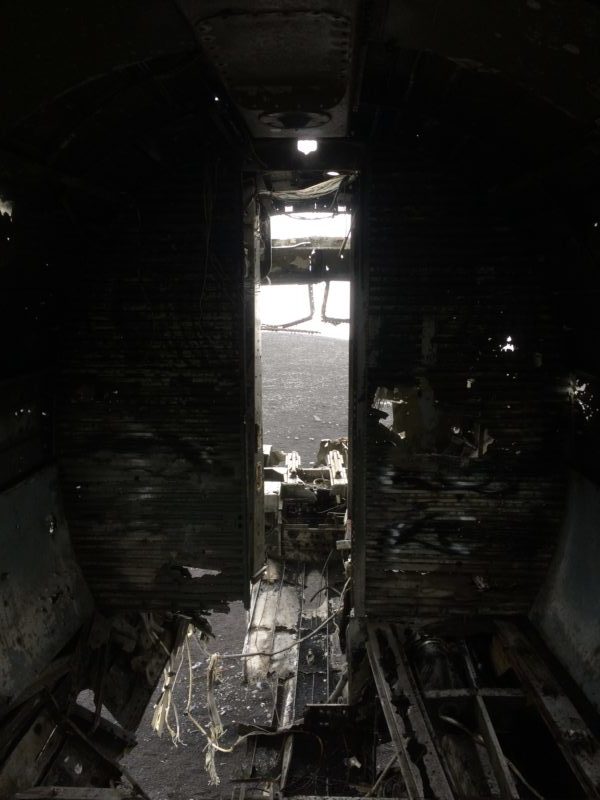
The insides of the wrecked plane.

It was kind of eerie.

We drove to the fuselage plane crash site at Solheimasandur black sand beach for my 30th birthday. This was the best birthday adventure ever! The story behind it was that the plane had to make an emergency landing back in 1973, and miraculously, nobody died. The crash site is actually about 4 km off the road, and folks have to brave the strong winds to get there. It sits on the shore of the North Atlantic ocean. The waves were so violent.

Laundromat Cafe

On my last morning there, my friend and I had coffee together at the Laundromat Cafe. Basically, you can do your laundry there while you eat. We didn’t try it, though it’s a pretty neat set up.

In case you’re wondering what an Icelandic sunset looks like.

Thank you for the good times, Iceland! Now I’m back and have hit the ground running. There’s so much to do and catch up around here, because I’m taking an enormous leap of faith pretty soon. You’ll see what I mean.
Let’s just say that I haven’t felt this terrified in a long time.